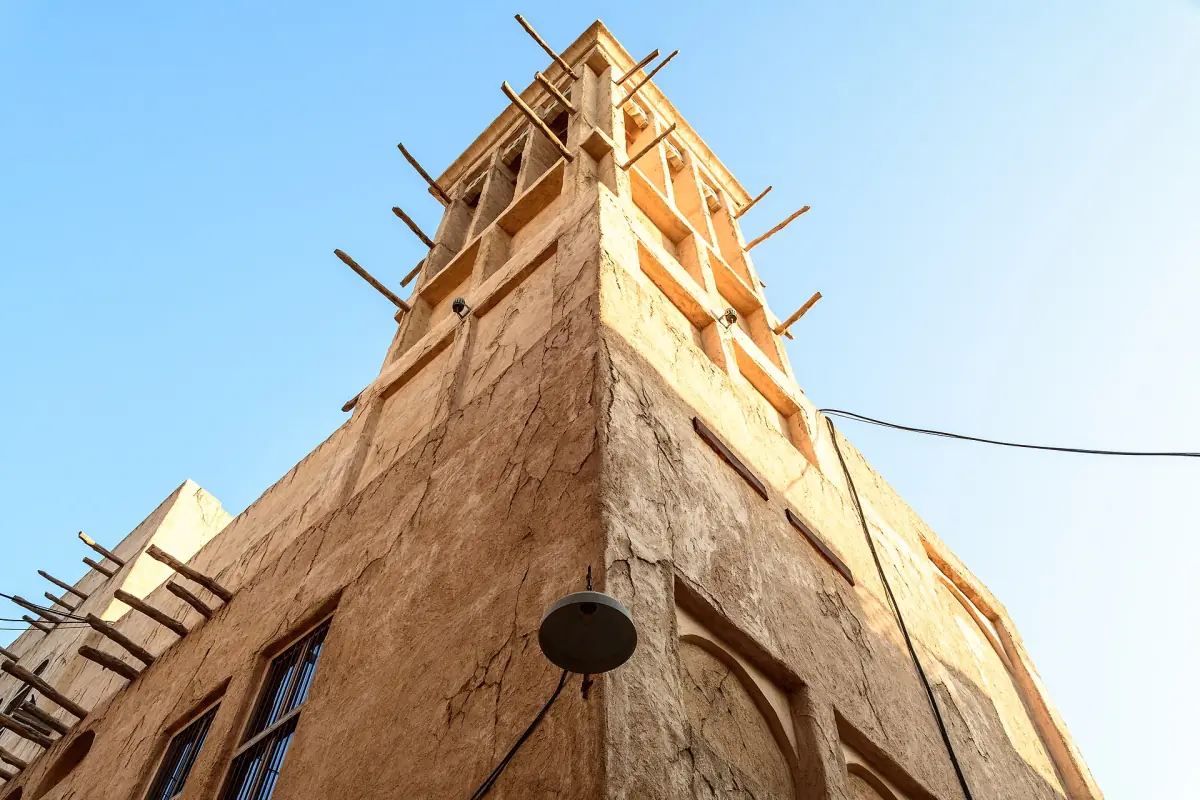
Reading Old Dubai architecture in Al Fahidi
Old Dubai architecture is a reason to linger in Al Fahidi rather than simply pass through on the way to the souks. The historic neighbourhood stands in Bur Dubai beside Dubai Creek. Its wind towers, enclosed houses and narrow lanes offer a different way to understand the city: start with how a home handled air and privacy, then connect those details to the merchants and communities who lived here.
A useful walk combines observation with explanation. Look upwards at the tower openings, then down towards the small doorways and the relationship between neighbouring walls. A guided heritage visit adds cultural context, while a photography-focused outing makes the buildings part of a wider route. Our Old Dubai tours guide compares broader walks if architecture is only part of your day.
Our picks: heritage visits
Our take: Choose the district walk for the mosque and cultural centre, or the museums walk for historic sites and an abra ride. The photography experience includes a heritage house visit.
Hand-picked tours, booked through GetYourGuide and Viator. Prices are indicative starting prices in US dollars (as of November 2026). Tap a tour for live availability and the current price in your currency.

Heritage house visit with photography
- Professional photography
- Local licensed tour guide
- Al Khayma Heritage House visit
Arabic tea or coffee and dates are included, along with abra water taxi fees.
Check availability →
Al Fahidi heritage district walk
- Guided tour
- Entrance to Ruler's Court Mosque
- Arabic coffee and dates
Explore the historic district with a guide, including a visit to the cultural centre.
Check availability →
Historic sites and museums walk
- Local professional guide
- Entry to historical sites
- Entry to museums
An abra ride is included; pickup and street food depend on the option. There is no return transfer, and no specific museum is guaranteed.
Check availability →Heritage walks and photography in Al Fahidi
Choose cultural interpretation, a route through historic houses or a guided photography outing with a heritage-house visit.
Merchants from Bastak and the name Bastakiya
The older name Bastakiya connects the neighbourhood with merchants from Bastak in Persia. That connection helps explain the area's trading history, but it is not a description of every former resident. Al Fahidi belongs within the story of communities exchanging goods and ideas around the Creek, rather than a single founding family or a simple origin date.
Let that history guide what you look for. Houses and passages are more useful starting points than searching for one building that supposedly represents the whole neighbourhood. The relationship between domestic space and the surrounding streets is part of the interest. For the larger setting, the Al Fahidi overview connects the quarter with culture, food and the water nearby.

Wind towers and the movement of air
A barjeel is a tall rectangular tower with openings at its sides. It channels air into a connected main room, helping cool the house. The tower therefore belongs to the building's practical design as well as its outline against the sky. Narrow lanes also contribute shade and air movement. Looking at both together gives a fuller picture than treating the tower as decoration.
Study the exterior from the walking route and treat house entrances as separate spaces with their own access rules. This is a neighbourhood visit, so build the route around the architecture you can observe and the interiors included in your chosen programme. Leave roof and tower access out of your plans unless a particular visit expressly offers it.
Materials and privacy in the traditional house
Traditional construction used shell or coral stone, saruj and gypsum. Small doors and screening helped protect domestic privacy. These details make the houses worth reading at a human scale: the proportions of an entrance and the separation between street and home matter alongside the more visible towers.
Dress modestly and ask permission before photographing people. A quiet doorway can be a working entrance rather than a public photo setting. The museums and galleries guide helps you plan visits to cultural interiors separately, instead of treating every historic house as an open attraction.
Conservation, reconstruction and the comparison with Al Seef
Today's Al Fahidi reflects conservation, reconstruction and replication over several decades. Its value does not depend on every surface remaining untouched. Read the quarter as a place where historic forms have been preserved and re-presented, and avoid reducing that process to a promise of completely original buildings.
Al Seef is a younger development using a historic style. It can complement an outing, but it has a different relationship with the past from Al Fahidi. Comparing the two is useful precisely because they are different. Combine your walk with the Creek and souks if you want to place the architecture within the trading landscape.
Which visit fits an interest in buildings?
The heritage tour combines the district with the cultural centre, a mosque visit, Arabic coffee and dates. The historic-houses route adds a guide and an abra ride; pickup transportation and street-food tasting depend on the option, and return transport is excluded. The photography outing includes a local guide, professional photography, a heritage-house visit and abra fees. Choose by that experience rather than expecting a specialist visit inside every wind tower.
Architecture questions
What does a wind tower do?
A barjeel directs air through side openings into a connected room. Notice the tower alongside the shaded lanes to understand how the architecture responds to heat.
Is Bastakiya another neighbourhood?
Bastakiya is an older name associated with Al Fahidi and its historical connection with merchants from Bastak. Use Al Fahidi when planning this visit.
Should I combine Al Fahidi and Al Seef?
That combination offers a useful comparison between a conserved historic quarter and a younger development in a historic style. Give Al Fahidi time for its houses and cultural context.