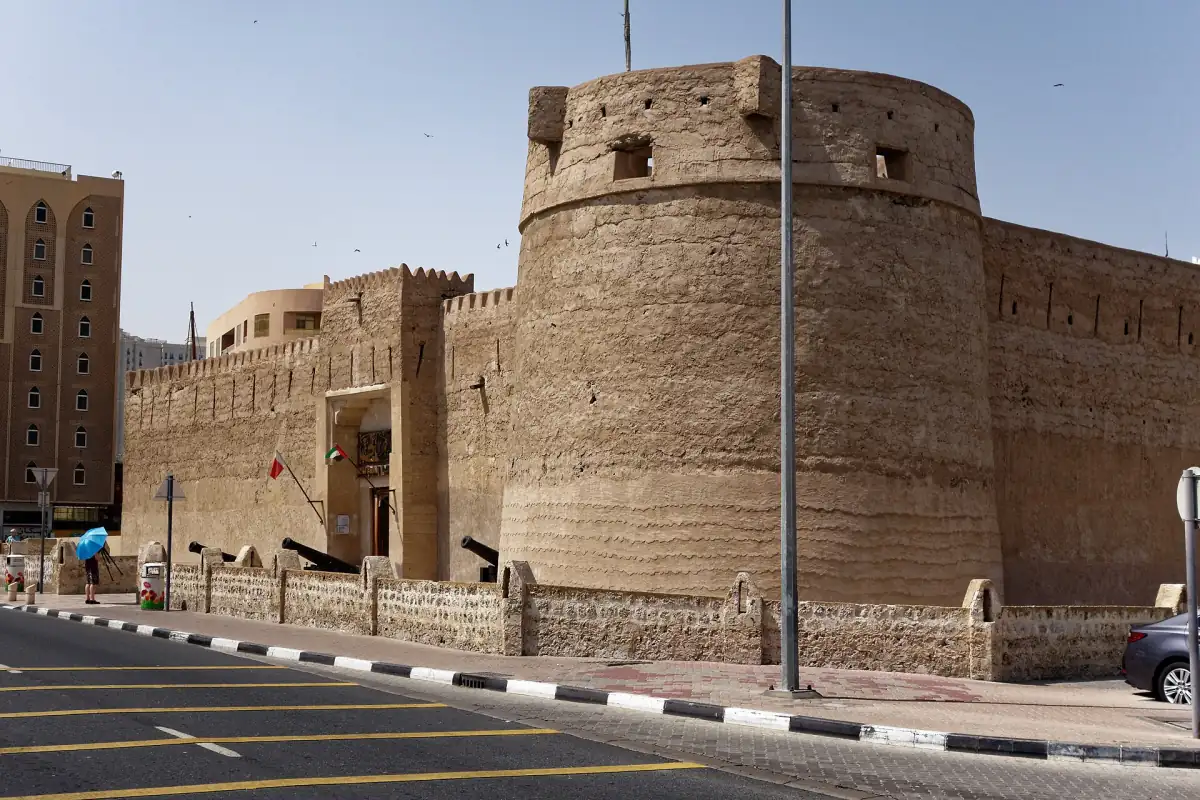
Al Fahidi Fort and the neighbourhood's cultural houses
Al Fahidi Fort is the starting point for understanding the area's museum history, but a cultural visit to the neighbourhood can take several forms. In Bur Dubai beside the Creek, the quarter brings together historic architecture, coffee heritage and galleries. Decide which interiors interest you, then arrange a walk around those particular houses rather than treating the neighbourhood as one museum with a single timetable.
That distinction matters when planning the day. An exterior view of the fort, a coffee display and an art exhibition are separate experiences. Leave room between them for the lanes and wind-tower houses, and give a priority house a place in your plan before adding other stops. The architecture and history guide explains the buildings around you.

The fort's changing purpose and Dubai Museum
The fort's history reaches back to around 1787. It has served as a defensive structure, a ruler's residence, an administrative place and a prison. Dubai Museum opened here in 1971. Those changing uses make the building a helpful reference point when thinking about how the city developed before the skyline familiar to visitors today.
For an interior museum visit, use the museum's own current visitor information before setting your route. Reopening announcements are a reason to look for a dated admission notice, rather than reuse an older ticket price or weekly schedule. Plan the fort as a historical landmark and fit an indoor visit around the arrangements available for your day. Keep the rest of the neighbourhood on your itinerary as well.
A guided neighbourhood walk can link houses, the Creek and markets while you explore this cultural setting. The offer here includes a guide and entry to historical sites and museums in general; choose it for that wider route rather than a promised admission to Dubai Museum or a named gallery.
Our pick: historic sites
Our take: This guided walk includes entry to historical sites and museums, without naming a particular museum.
Hand-picked tours, booked through GetYourGuide. Prices are indicative starting prices in US dollars (as of November 2026). Tap a tour for live availability and the current price in your currency.

A guided route through Al Fahidi and Old Dubai
This neighbourhood walk combines historic sites with a guide, an abra ride and the souks, giving cultural stops a wider setting.
Coffee heritage as a focused indoor stop
The Coffee Museum describes roasting and brewing demonstrations alongside historical objects on its ground floor. Books, documentary films and a lounge form part of the upper floor. This makes it a different kind of stop from a general city-history exhibition: the subject is coffee and the objects and practices around it.
Build the visit around that subject rather than a promise of a complimentary drink. Consult the house's visiting information for your chosen day, particularly if Friday is central to your plans. For an experience centred on eating and conversation, the food and cultural meals guide separates tastings on a walk from a seated cultural brunch. Those are different bookings from entering a museum.
Art and exhibitions follow each gallery's calendar
XVA Gallery and The Majlis Gallery provide examples of art spaces within the quarter. They have their own operator schedules: XVA lists daily visits, while Majlis lists Sunday as its weekly closing day and shorter hours during Ramadan. Arrange an exhibition visit around the particular gallery, allowing for its own programme and visitor arrangements.
Choose an art stop because its current exhibition interests you. A historic building and contemporary art can make a rewarding pairing, but the age of the walls tells you nothing about today's exhibition or admission terms. A neighbourhood map is useful for orientation; an older house name on a map is not a substitute for current visiting information.
Putting cultural stops into a workable day
Start with your priority interior and use the lanes as the connection between visits. In summer, allow shade, water and pauses instead of filling every gap with another walk. During Ramadan, give individual house hours extra attention. The season and daytime planning guide helps you match outdoor walking to the heat.
Sharaf DG, formerly called Al Fahidi Metro Station, is a useful name to recognise when organising your arrival. Read the getting there guide for the Metro approach, then save the address of the actual house or tour meeting point. This makes the first stop more useful than navigating only to the neighbourhood name. Afterwards, the Creek gives your visit a different perspective.
Museums and galleries: practical questions
How should I plan an indoor visit to Dubai Museum?
Use the museum's current visitor information for admission and opening arrangements. Keep the fort's history and the wider neighbourhood in your plan, with the interior visit arranged separately.
Does the neighbourhood tour include a particular gallery?
The offer includes historical-site and museum entry in general. Treat a visit to a specific gallery as a separate stop organised around that gallery's programme.
Can I use one timetable for all the houses?
Each house has its own schedule. Choose the museum or gallery you most want to see and arrange the rest of your walk around its visiting hours.